

This post is aimed at providing you with a simple tool to build positive relationships and influence others, using the social behaviour SCARF model, first published by David Rock in 2008.
Getting the best out of people who connect with us is a great skill. This model works by identifying 5 domains that activate the primary reward or primary threat circuitry in a person’s brain.
Lets have a butchers at the 5 domains…
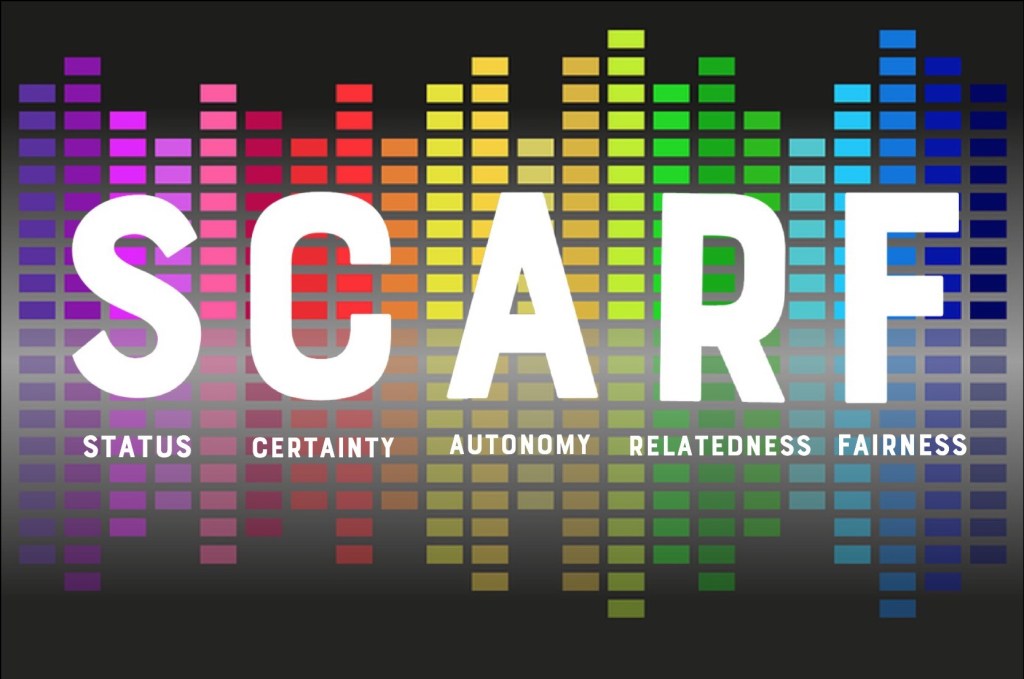
- Status – This is our sense of self worth. Where we feel we sit within any hierarchy and our relative importance to others
- Certainty – This is how much we like to be in a comfort zone and be able to predict the future
- Autonomy – This is about having control of our environment and events within it
- Relatedness – This is about the need for safety and productive relationships
- Fairness – This is about how fair we perceive exchanges between ourselves and others
You may have noticed the picture above looks like a graphic equaliser. If you are a child of the 80s you will most certainly remember them from the ghetto blaster you carried on your shoulder, probably whilst swigging white lightening in your local park.
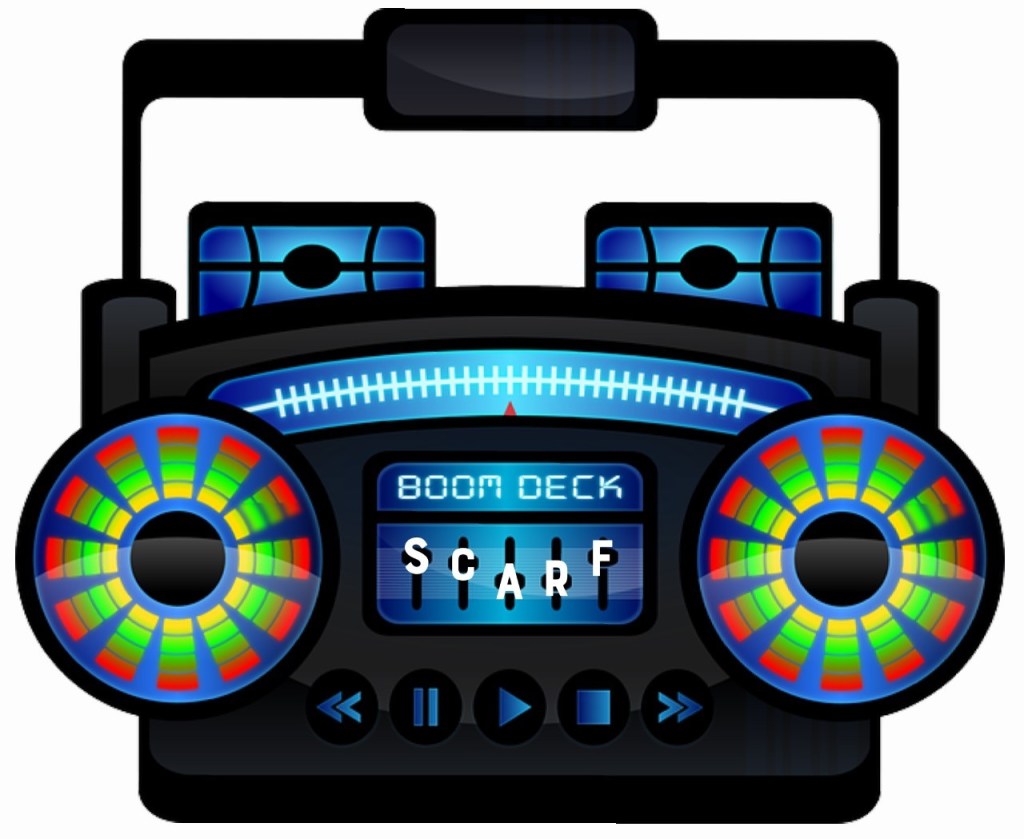
My build on the SCARF model is to use the mental image of the graphic equaliser as a visual, to help assess individuals preferences around the 5 domains. This is with a view to support productive relationships and influence effectively.
A graphic equaliser was a series of sliders on the ghetto blaster that allowed you to increase or decrease bass, treble etc.. You would mess around with these to get the perfect sound that worked for you and your pals.
By comparison, every person has a sliding setting for each element of the SCARF model. They will have areas that they are high, medium or low on. Your job is to find the settings for each domain and leverage either positively or negatively to get a mutually beneficial result.
I would encourage you to give this a whirl….
- Pick a relationship that is important to you are present
- Think about what you have observed about the person on Status, Certainty, Autonomy, Relatedness and Fairness
- Get a paper and pen and Plot them on the SCARF Equaliser for each of the 5 domains
- If you are not clear, create small interventions that will provide you with more insight
- Adapt your style to connect for better relationships
- Continue to tweak the 5 domains throughout your relationship to get the very best output. You initial view may not be accurate or the persons preferences may change over time
Also, do this to constantly assess yourself….
As stated earlier in the post, the SCARF model can be used to leverage from a reward or threat perspective. Here is an example to demonstrate how you can influence from both sides of this spectrum.
If you evaluate that someone is off the scale on autonomy you can tailor conversations and next steps around empowering for positive behaviours and disempowering for non productive behaviours.
My caveat is when using reward or threat as a leverage point, is to ensure that this is in the best interests of the individual’s long term growth and well-being. If you do not look from their perspective, the relationship will falter long term. #toughlove
- Start with yourself. Where do you sit on the SCARF model and how does it affect your beliefs and behaviours?
- Think about how those behaviours impact your strong and weak relationships and how changing your communication and approach can lead to stronger relationships.
- How can you hone your skill at picking up information to feed into your SCARF equalisers?
- What is your method to decide whether reward or threat is appropriate to support the person and move the relationship forward?
- Think about what you have in your toolbox to leverage each of the 5 domains. How can you make it better?


