

Tim Urban is one of my favourite bloggers. He writes the blog ‘wait but why’ and I would strongly encourage you to read it if you have some spare time.
One of his posts on his blog is called Elon Musk’s Secret Sauce, where he unlocks some key insights on technology billionaire Elon’s mindset and approach.
My interpretation of Tim Urban’s post surmises that Elon defines people as either Chefs or Cooks.
Chefs are hugely creative, and may make mistakes in the process, but can create something incredible. Cooks simple follow recipes and limited progress is made. Elon loves Chefs!
Elon himself is a Michelin starred businessman and has created some incredible disruptive businesses like PayPal, Tesla and SpaceX, making himself one of the most influential business people in the world.
Being a Chef in your given vocation, certainly appears to be the way forward?
Whilst I loved Tim’s post and found it insightful, something didn’t sit easy with me. I have worked in sales and service environments for 20 years , constantly looking to embed consistent processes to deliver results. In essence, following the recipe is a prerequisite to long term success.
To build, looking at the great football teams, recently highlighting Pep Guardiola, no one plays in his team unless they play to his system. Regardless of their talent, capability or reputation.
It is great that Elon is wanting to make a dent in the universe. Most of us however, would settle for making a dent in our credit card balance.
So, instead of bowing too low to Elon’s undoubted magnificence, I want to explore how us mere mortals can find a way to make the chef vs cook conundrum fit.
Introducing the culinary scale. The culinary scale gives us a clear view on the steps from the 100% recipe follower cook to the 100% recipe creator chef…
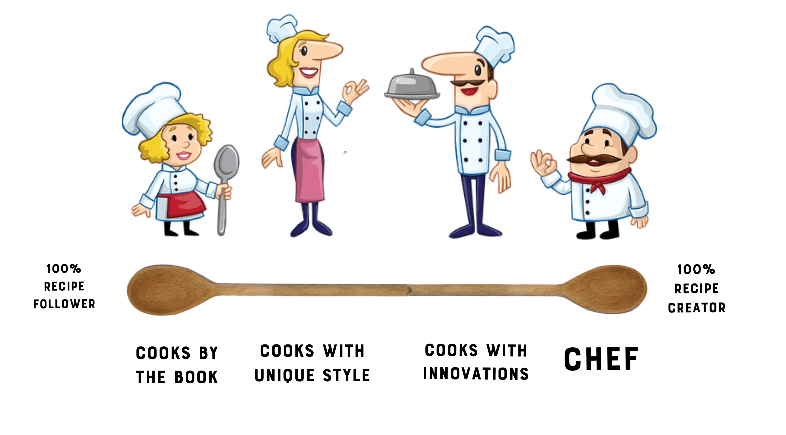
What this scale leads me to conclude, is that in a leadership roles, the secret to longer term success for your team is to support them moving along the scale. It would be nice to think you can pop down to Argos and buy a michelin chef, but in reality it ain’t gonna happen.
Think about it anyway. When you see documentaries on Michelin star chefs, their origins are usually the same. They went and worked for the best chefs in the world spending 18 hour shifts, 7 days a weeks, following the recipes of their mentors. Once they had learned the basics, they start to explore their own ideas building confidence and reputation.
Chefs have always moved along this scale. Admittedly, some faster than others and to greater heights. Your job is to be a great coach, teacher, mentor and challenger and help the individual reach their desired potential.
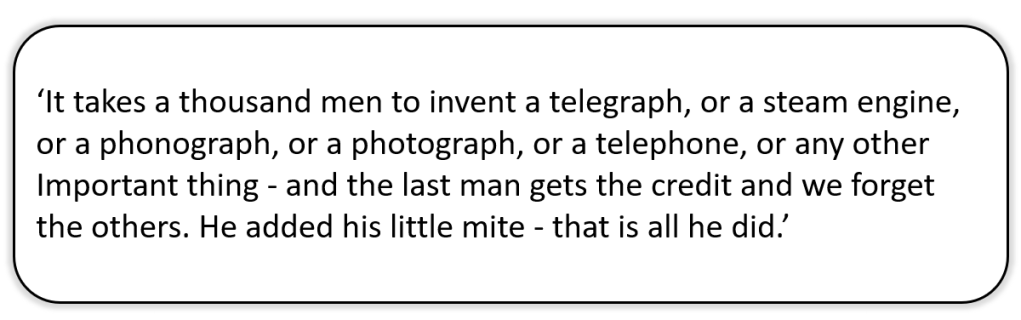
Furthermore, is becoming a 100% recipe creator ever achievable? Here is a Mark Twain quote to give his view…
A Michelin starred deconstructed tiramisu is still a tiramisu. It’s just five times the price!
I am not saying that you shouldn’t show passion and commitment to make things better, what I am advocating is to understand that we are all on a journey of improvement, not god, the father, the son and the holy spirit all rolled into one. Amen!
In the spirit of the message above, here is my build on the Chef vs Cook debate, looking primarily from the perspective of leading sales and service teams…
Have a look at this simple framework. It links results to behaviours and then gives a subsequent next step…
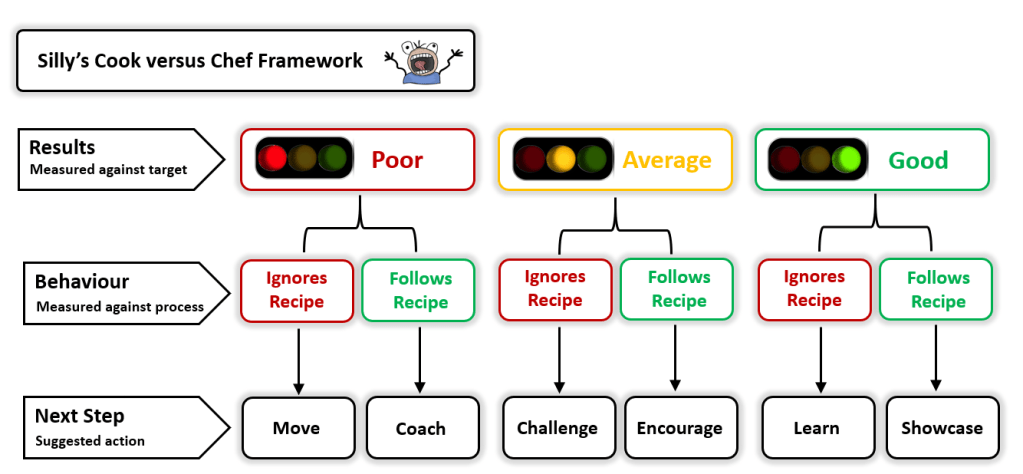
Some observations from the framework….
- Following the recipe is the path of least resistance. This means we advocate the embedding of sales and service cycles, ensuring consistency across the whole team. You should coach, encourage and showcase team who do this
- If someone cannot perform and cannot follow the process you need to support them to move a more suitable vocation.
- If a team member is doing ok but not following the process you need to give some challenge
- If a team members results are good, and they have their own style, we will look to learn from them, to improve the overall process for everyone.
The advantage of this is that it gives clarity to both your team and yourself, around the likely impact of results and behaviour within your organisation.
The success of using this framework obviously relies on 2 caveats…
- Clear measurement of results
- Clear expectation of the process
You need to make sure you are delivering your part of the bargain by being clear on the above.
Bringing this all together…
- How clear are my team on what poor, average and good performance is?
- How clear are my team on what the process expectations are?
- Where I think my team sit within the framework? Where do they think they fit? What evidence is there to support?
- Where are my individuals on the culinary scale and how do I support them individually to be better?
- Who are my chefs and what can I learn from them for the benefit of the wider team?
Now, go and cook up a storm!

